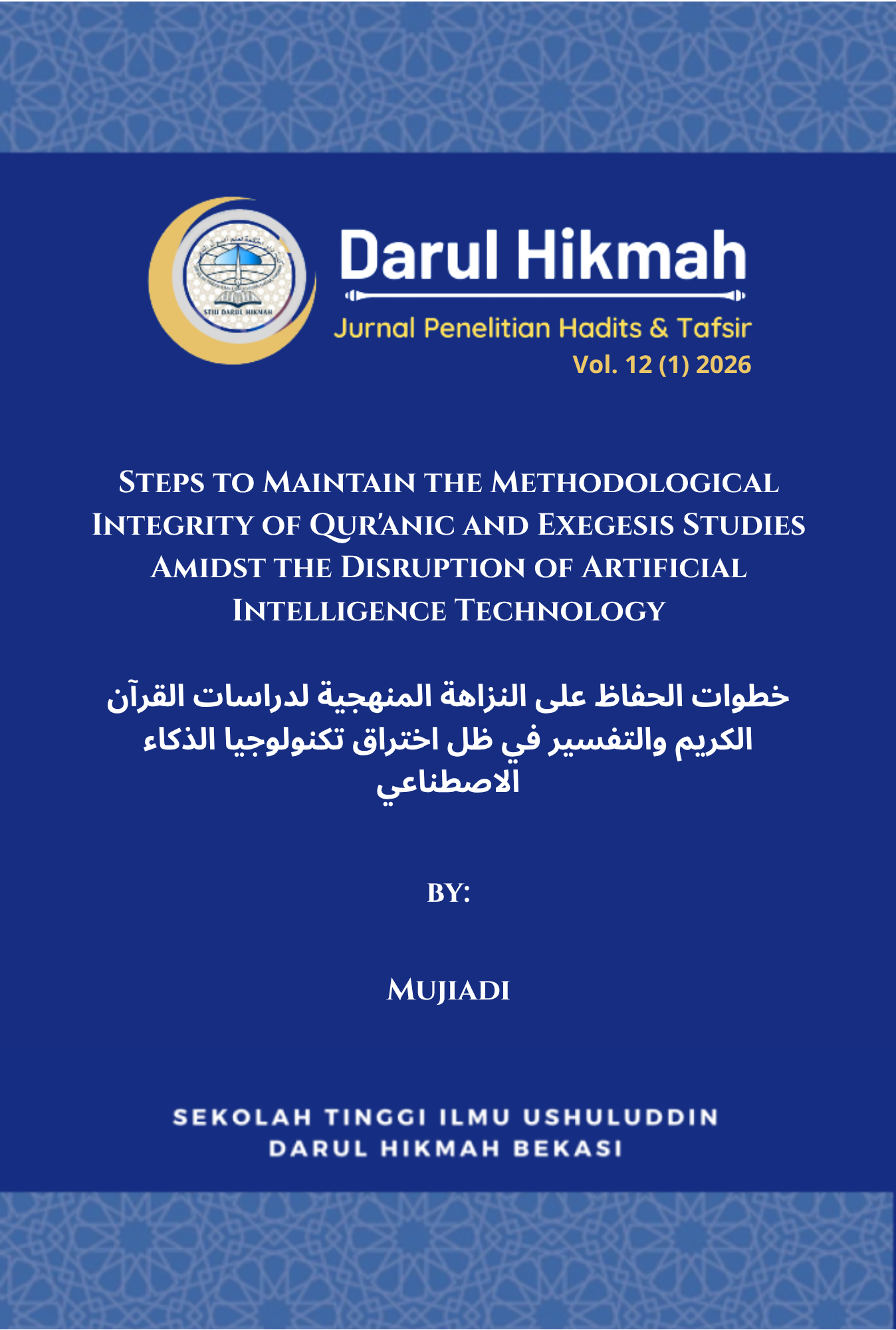
Langkah Mempertahankan Integritas Metodologis Studi Al-Qur’an dan Tafsir di Tengah Disrupsi Teknologi Kecerdasan Buatan
DOI:
https://doi.org/10.61086/jstiudh.v12i6.99Kata Kunci:
Studi Al-Qur’an, Metodologi Tafsir, Kecerdasan BuatanAbstrak
Disrupsi teknologi kecerdasan buatan (Artificial Intelligence/AI) telah mengubah secara fundamental cara pengetahuan diproduksi, disebarluaskan, dan dikonsumsi dalam dunia akademik kontemporer. Fenomena ini juga merambah bidang studi Al-Qur’an dan Tafsir, yang secara tradisional dibangun di atas fondasi metodologis yang ketat, otoritas keilmuan, dan tanggung jawab epistemologis. Artikel ini bertujuan untuk menganalisis secara kritis tantangan dan implikasi penggunaan AI dalam studi Al-Qur’an dan Tafsir dengan menyoroti tiga dimensi utama, yaitu epistemologis, teknis, dan etis. Penelitian ini menggunakan pendekatan kualitatif berbasis studi pustaka kritis terhadap literatur klasik Ulūm al-Qur’ān, kajian tafsir, serta literatur kontemporer mengenai etika dan epistemologi AI. Hasil kajian menunjukkan bahwa meskipun AI memiliki potensi besar sebagai alat bantu penelitian, teknologi ini tidak memiliki kapasitas epistemik untuk menghasilkan ilmu tafsir dalam pengertian metodologis. Oleh karena itu, diperlukan strategi sistematis berupa penguatan literasi metodologis, kolaborasi lintas disiplin, serta kerangka regulatif dan etis yang ketat guna memastikan bahwa pemanfaatan AI tidak mengaburkan batas antara informasi, pengetahuan, dan otoritas ilmiah dalam studi Al-Qur’an dan Tafsir.
Unduhan
Diterbitkan
Terbitan
Bagian
Lisensi
Hak Cipta (c) 2026 Darul Hikmah: Jurnal Penelitian Tafsir dan Hadits

Artikel ini berlisensiCreative Commons Attribution-NonCommercial-ShareAlike 4.0 International License.
This work is licensed under a Creative Commons Attribution-NonCommercial-ShareAlike 4.0 International License.
You are free to:
- Share — copy and redistribute the material in any medium or format
- Adapt — remix, transform, and build upon the material
- The licensor cannot revoke these freedoms as long as you follow the license terms.
Under the following terms:
- Attribution — You must give appropriate credit, provide a link to the license, and indicate if changes were made. You may do so in any reasonable manner, but not in any way that suggests the licensor endorses you or your use.
- NonCommercial — You may not use the material for commercial purposes.
- ShareAlike — If you remix, transform, or build upon the material, you must distribute your contributions under the same license as the original.
- No additional restrictions — You may not apply legal terms or technological measures that legally restrict others from doing anything the license permits.
Notices:
You do not have to comply with the license for elements of the material in the public domain or where your use is permitted by an applicable exception or limitation.
No warranties are given. The license may not give you all of the permissions necessary for your intended use. For example, other rights such as publicity, privacy, or moral rights may limit how you use the material.