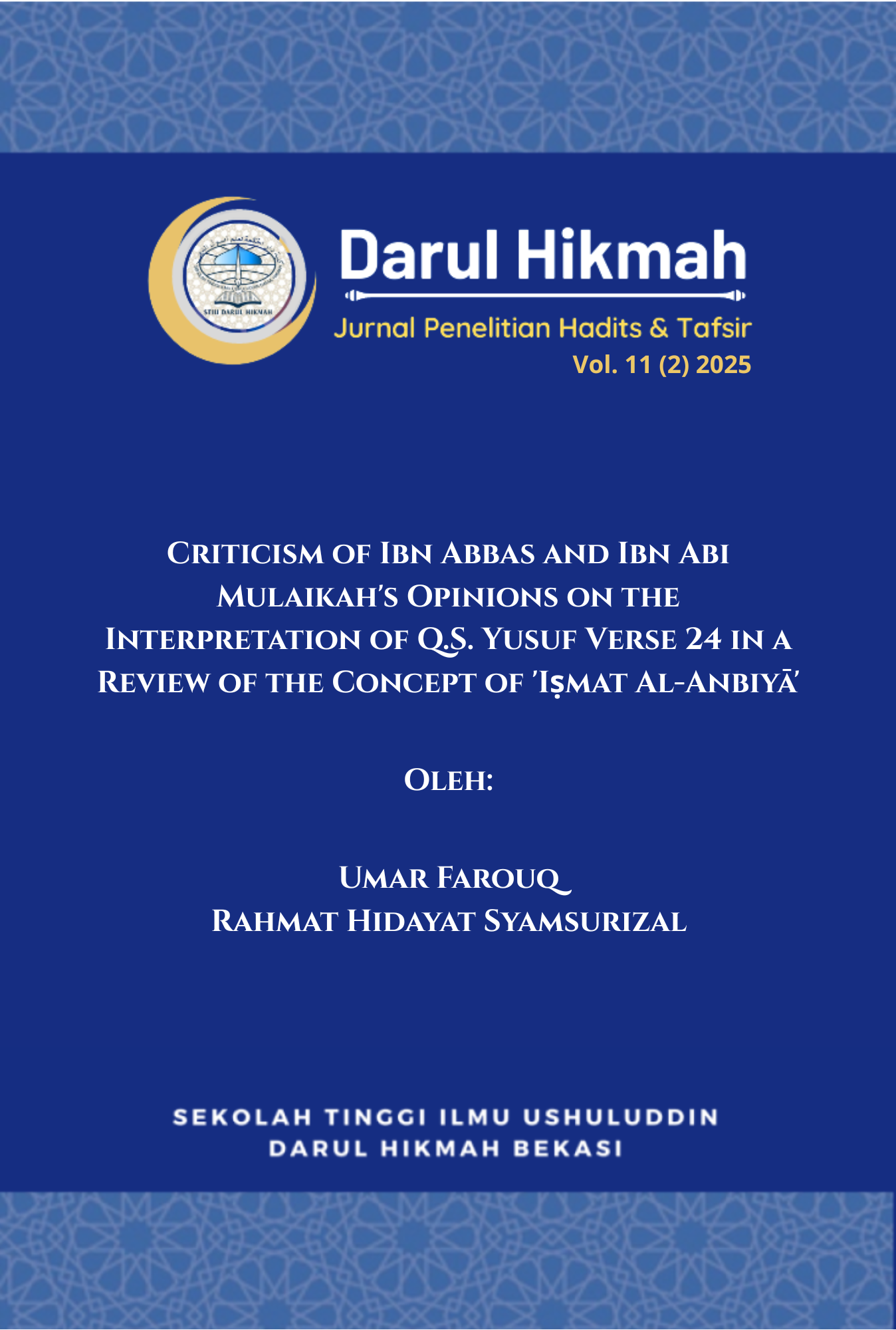
Criticism of Ibn Abbas and Ibn Abi Mulaikah's Opinions on The Interpretation of Q.S. Yusuf Verse 24 in A Review of The Concept of 'Iṣmat Al-Anbiyā'
DOI:
https://doi.org/10.61086/jstiudh.v11i2.90الكلمات المفتاحية:
Tafsir criticism، Ibnu Abbas، Ibnu Abimulaikah، Q.S. Yusuf verse 24، Iṣmat al-Anbiyāالملخص
The interpretation of Q.S. Yusuf verse 24 is often debated among scholars, especially regarding the concept of infallibility (‘Iṣmat al-Anbiyā’) or the infallibility of the prophets. This verse is considered to contain important implications regarding the Prophet Yusuf's resistance to temptation, which forms the basis for understanding the nature of the infallibility of the prophets in Islam. This study aims to criticize the opinions of Ibn Abbas and Ibn Abi Mulaikah in interpreting this verse, which are considered different by some scholars because they are considered contrary to the principle of ʿIsmatul Anbiya. This study uses a library research method by collecting and analyzing classical and contemporary sources, including commentaries and works of scholars. The results of the study show that the interpretations of Ibn Abbas and Ibn Abi Mulaikah received sharp criticism from other commentators, such as Asy-Syinqithi, who argued that both interpretations are less in accordance with the concept of the infallibility of the Prophet from all sins and moral weaknesses. This finding emphasizes the importance of understanding the context and principles of ʿIsmatul Anbiya in interpreting verses concerning the character of the prophets, to be in accordance with the views of the majority of scholars who maintain the moral integrity of the prophets.
التنزيلات
منشور
إصدار
القسم
الرخصة
This work is licensed under a Creative Commons Attribution-NonCommercial-ShareAlike 4.0 International License.
You are free to:
- Share — copy and redistribute the material in any medium or format
- Adapt — remix, transform, and build upon the material
- The licensor cannot revoke these freedoms as long as you follow the license terms.
Under the following terms:
- Attribution — You must give appropriate credit, provide a link to the license, and indicate if changes were made. You may do so in any reasonable manner, but not in any way that suggests the licensor endorses you or your use.
- NonCommercial — You may not use the material for commercial purposes.
- ShareAlike — If you remix, transform, or build upon the material, you must distribute your contributions under the same license as the original.
- No additional restrictions — You may not apply legal terms or technological measures that legally restrict others from doing anything the license permits.
Notices:
You do not have to comply with the license for elements of the material in the public domain or where your use is permitted by an applicable exception or limitation.
No warranties are given. The license may not give you all of the permissions necessary for your intended use. For example, other rights such as publicity, privacy, or moral rights may limit how you use the material.