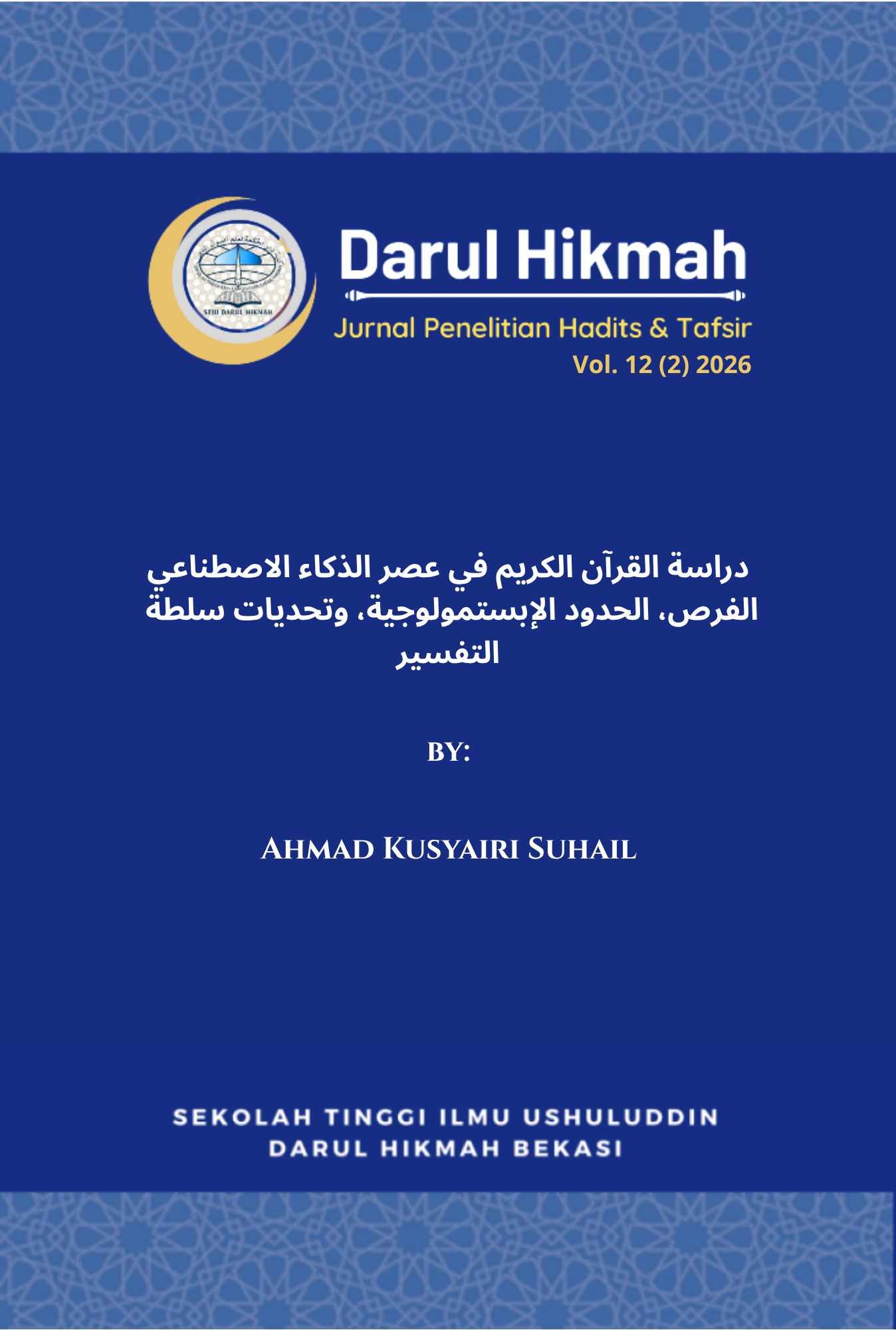
دراسة القرآن الكريم في عصر الذكاء الاصطناعي: الفرص، الحدود الإبستمولوجية، وتحديات سلطة التفسير
DOI:
https://doi.org/10.61086/jstiudh.v12i2.101Kata Kunci:
التحول الرقمي, الذكاء الاصطناعي التوليدي, الدراسات القرآنيةAbstrak
تهدف هذه الدراسة إلى تحليل الأهمية الجوهرية لدراسة القرآن الكريم بناءً على المناهج التراثية، وتقييم التحديات الحرجية التي يفرضها الذكاء الاصطناعي في مجال الدراسات القرآنية. تعتمد هذه الدراسة على منهج البحث المكتبي النوعي. تم جمع البيانات من النصوص الإسلامية التراثية والمعاصرة، بالإضافة إلى الأدبيات الحديثة حول تطبيقات الذكاء الاصطناعي في الدراسات الدينية، ثم تم تحليل البيانات باستخدام التحليل الموضوعي والتحليل النقدي للمحتوى. وتظهر النتائج أنه في حين ركز علماء السلف على الفهم الشامل (التدبر) والعمل، فإن أدوات الذكاء الاصطناعي تعمل أساساً على معالجة البيانات الإحصائية واشتقاق احتمالية الكلمات. ويفتقر الذكاء الاصطناعي إلى القدرة الذاتية على فهم المقاصد العقدية والشرعية الكامنة في النصوص القرآنية. تشير الآثار المترتبة على هذه الدراسة إلى أن الذكاء الاصطناعي يجب أن يوضع كأداة مساعدة ثانوية لزيادة الكفاءة الفنية، وليس بديلاً عن السلطة المعرفية والروحية للبشر. إن وجود نموذج تعاضدي بين البصيرة البشرية وكفاءة الآلة أمر ضروري للحفاظ على أصالة التفسير القرآني من مخاطر الهلوسة المعلوماتية الرقمية.
Unduhan
Diterbitkan
Terbitan
Bagian
Lisensi
Hak Cipta (c) 2026 Darul Hikmah: Jurnal Penelitian Tafsir dan Hadits

Artikel ini berlisensiCreative Commons Attribution-NonCommercial-ShareAlike 4.0 International License.
This work is licensed under a Creative Commons Attribution-NonCommercial-ShareAlike 4.0 International License.
You are free to:
- Share — copy and redistribute the material in any medium or format
- Adapt — remix, transform, and build upon the material
- The licensor cannot revoke these freedoms as long as you follow the license terms.
Under the following terms:
- Attribution — You must give appropriate credit, provide a link to the license, and indicate if changes were made. You may do so in any reasonable manner, but not in any way that suggests the licensor endorses you or your use.
- NonCommercial — You may not use the material for commercial purposes.
- ShareAlike — If you remix, transform, or build upon the material, you must distribute your contributions under the same license as the original.
- No additional restrictions — You may not apply legal terms or technological measures that legally restrict others from doing anything the license permits.
Notices:
You do not have to comply with the license for elements of the material in the public domain or where your use is permitted by an applicable exception or limitation.
No warranties are given. The license may not give you all of the permissions necessary for your intended use. For example, other rights such as publicity, privacy, or moral rights may limit how you use the material.